
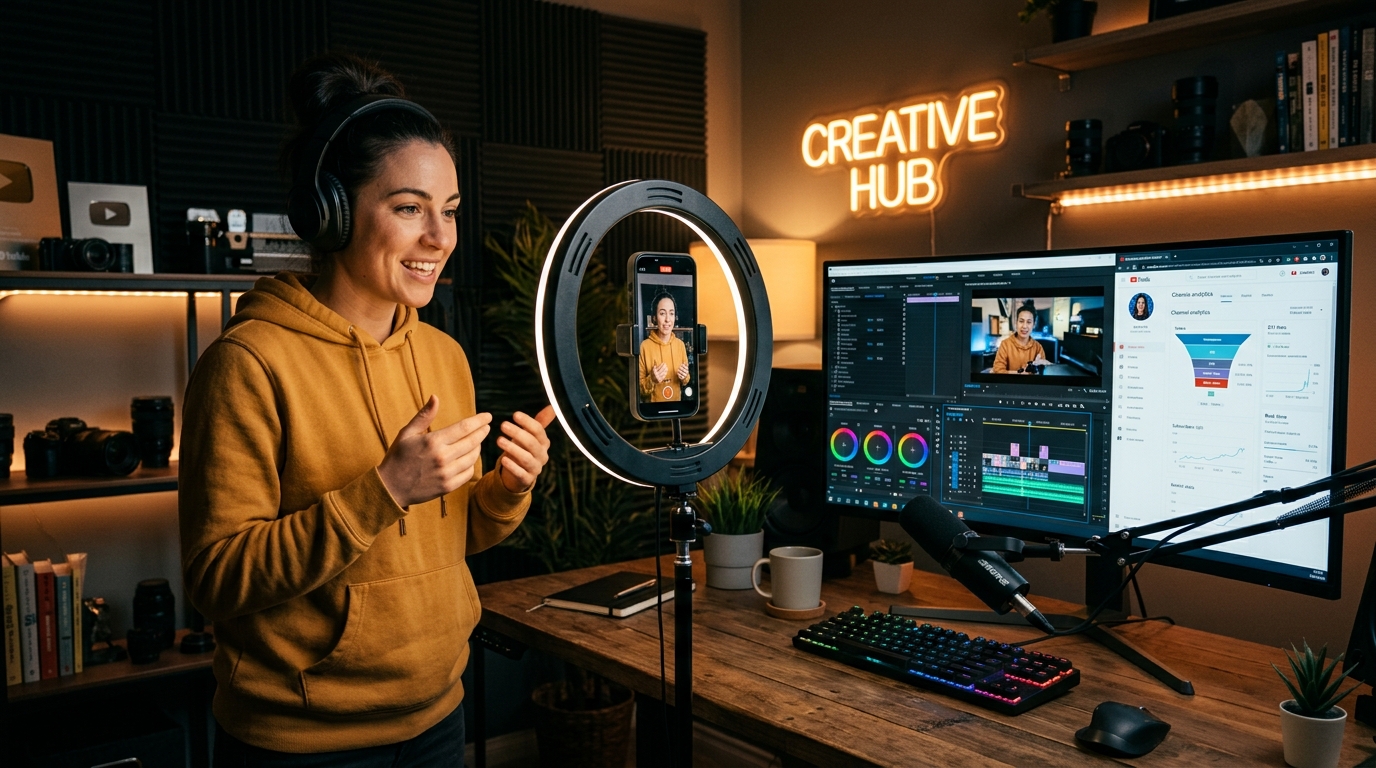
The Shorts to Long-Form Disconnect: Views vs. Audience Building
YouTube Shorts can bring thousands of views to a channel, but turning that attention into long-form viewers, subscribers, and meaningful growth is a different challenge. A Short that gets 100,000 views isn't necessarily more valuable than one that gets 10,000 if the smaller Short attracts people who actually care about your channel.
This guide focuses on what happens beyond the Shorts view count: how to connect Shorts with long-form content, give viewers a reason to continue watching, understand which Shorts are helping your channel, and judge whether your Shorts strategy is producing the audience you actually want.
The Core Funnel Principle
Never evaluate a Short purely by its view count. For a creator with long-form ambitions, the real diagnostic test is downstream behavior: Related Video clicks, returning viewers, and whether subscribers watch your next 15-minute video.
How Can You Use YouTube Shorts to Grow Long-Form Videos?
A Short can introduce your channel to thousands of people, but the real opportunity is turning some of those viewers into people who want the full answer.
The most effective setup is to make the Short and long-form video part of the same topic journey. For example, a Short could show one mistake that is hurting YouTube CTR, while the related long-form video explains the complete thumbnail optimization process.
The Short should give viewers enough value to make them interested, but leave a genuine reason to continue. Then connect it to the relevant long-form video using YouTube's Related Video feature, which gives viewers a direct clickable path to another video on your channel.
The Proven Short-to-Long-Form Funnel Flow
The connection matters more than the number of Shorts you publish. A smaller Short that attracts the right viewers can send more useful long-form traffic than a viral Short built around a completely different audience.
Retaining those viewers once they arrive is essential. Discover how video structuring and retention hooks keep viewers engaged in our guide on how to increase YouTube watch time.
Why Don't Shorts Viewers Watch Long-Form Videos?
Getting strong Shorts views but very few long-form views usually means the Short is attracting attention without creating enough interest in the longer video. Audience mismatch is one reason, but there are several others:
A quick entertainment-based Short can reach people who enjoy a 20-second tip but have no interest in spending 15 minutes learning the subject in depth. For example, a viral AI trick may attract casual viewers, while your long-form video targets people building a complete AI workflow.
If viewers get the answer, result, or interesting trick in 20 seconds, there may be nothing left that they need from the long-form video. A better Short creates curiosity around the larger problem rather than simply telling viewers to "watch the full video."
If a Short shows how to fix one thumbnail mistake but the linked video is a general YouTube SEO guide, the viewer has to figure out why they should click. The transition needs to feel natural: the Short introduces the problem, while the long-form video provides the complete solution.
Someone scrolling Shorts is often looking for quick discovery or entertainment. A long-form viewer is making a bigger time commitment. The Short needs to attract people who have enough interest in the topic to want the deeper explanation, not just people who happened to stop scrolling.
High Shorts distribution can expose a video to viewers outside your target audience. That can produce impressive view numbers without creating much demand for your longer content. This mirrors the issue discussed in our analysis on whether you can get 1,000 subscribers in one day without lasting audience engagement.
Even when a viewer does move from a Short to a long-form video, they can leave quickly if the opening spends too much time introducing the topic instead of continuing the promise that brought them there.
Beyond Vanity Views: Real Metrics That Matter
A better way to judge the strategy is to look beyond Shorts views. Check whether Shorts are producing Related Video clicks, long-form views, watch time, returning viewers, and subscribers who continue watching your longer videos.
If Shorts are getting millions of views but almost none of those viewers continue to your long-form content, the problem may not be that you need more Shorts. It may be that the Short is attracting the wrong viewers, giving them no reason to continue, or sending them to a video that doesn't match what they expected.
| Diagnostic Metric | Where to Find in Studio | Benchmark Target | Strategic Significance |
|---|---|---|---|
| Related Video Click Rate | Video Analytics → Reach → Traffic Source: Shorts | 2% to 6% of total views | Measures the direct bridge efficiency between vertical discovery and deep watch time. |
| Returning Viewers Trend | Channel Analytics → Audience Tab | Steady upward slope | Confirms whether casual discoverers come back for subsequent long-form releases. |
| Long-Form Retention at 0:30 | Video Analytics → Engagement → Audience Retention | > 70% retention | Reveals whether your long-form opening fulfilled the promise established by the Short. |
| Channel RPM Impact | Channel Analytics → Revenue Tab | Stable revenue per mille | Monitors whether Shorts views dilute overall revenue. Read our CPM vs RPM breakdown. |
What Type of Shorts Send Viewers to Long-Form Videos?
The Shorts that send viewers to long-form videos usually create a gap that the longer video is designed to fill. The Short should be useful on its own, but leave a natural reason to explore the subject further.
A few formats work particularly well:
A quick problem → complete solution
Show one part of a problem in the Short, then use the long-form video to walk through the complete process. For example, a Short can show why a YouTube video gets impressions but few clicks, while the long-form video breaks down title, thumbnail, and CTR optimization.
A result → how it was achieved
Show the outcome first, then take interested viewers into the longer explanation. This works well for SEO experiments, channel growth tests, editing workflows, and before-and-after examples because the Short creates interest in the process behind the result.
One mistake → full breakdown
Point out a specific mistake that viewers can recognize immediately, then connect it to a longer video that explains how to diagnose and fix the wider problem.
A quick comparison → detailed decision
A Short can highlight the most important difference between two tools, strategies, or products, while the long-form video gives viewers the testing, examples, trade-offs, and recommendation they need to make a decision. Especially lucrative for creators utilizing YouTube affiliate marketing to generate commissions.
A strong question → deeper answer
Sometimes the Short should not try to explain everything. A useful question or surprising finding can introduce the subject, while the long-form video answers the bigger question with evidence and context.
The strongest connection usually happens when the Short and long-form video solve the same problem at different depths. A viewer who watches the Short should already have a reason to care about the longer video.
Should Your Short Be a Clip From Your Long-Form Video?
Your Short doesn't have to be a direct clip from your long-form video. If there's a moment in the longer video that already makes sense by itself, using it can be an easy way to repurpose the content. But a lot of long-form videos are built around context, examples, and explanations that take time, so simply cutting out a small section can make the Short feel incomplete.
In many cases, it's better to take the idea from the long-form video and create the Short around it separately. For example, if your long-form video walks through an entire YouTube keyword research process, you could turn one useful discovery from that process into a Short and explain it in a much simpler way. You're still getting more content from the same research, but you're presenting the idea in a way that actually suits Shorts rather than just cutting the long video into smaller pieces.
Monetization & Algorithmic Realities: Shorts vs. Long-Form
Understanding how revenue accumulates between formats helps set proper expectations. Ads on Shorts are pooled and distributed among creators via the Shorts Feed Creator Pool, meaning Shorts typically yield an RPM between $0.03 and $0.15 per 1,000 views. In comparison, monetized long-form videos with mid-roll ads generate between $3.00 and $20.00+ RPM.
For an exhaustive calculation across both models, read our analysis on how much YouTube pays for 1 million views on long-form vs. Shorts. You can also evaluate entry criteria in our guide to YouTube monetization requirements, and explore diverse monetization tactics in our guide on how to make your first $100 on YouTube.
To forecast channel income across diverse niches, test our interactive YouTube Revenue Calculator.
Frequently Asked Questions
How much money is 1,000,000 views on YouTube Shorts?
There is no fixed payout for 1 million Shorts views. Shorts revenue comes from ads shown between videos in the Shorts Feed, with revenue pooled and distributed among eligible creators based on their share of eligible engaged views. Your actual earnings can vary significantly by audience, eligible views, and other factors. So 1 million Shorts views can be useful for reach and audience growth without necessarily producing a large ad payout. If you're evaluating Shorts for income, check your actual RPM in YouTube Analytics rather than relying on a generic estimate.
How to turn a Short into a long-form video?
Don't simply stretch a 30-second Short into a 10-minute video. Use the Short as the starting point for a larger solution. If the Short gives one YouTube SEO tip, the long-form video could explain when that tactic works, show examples, walk through the process, and cover mistakes that the Short couldn't address. The Short gives viewers the useful idea; the long-form video gives them the depth to apply it.
How to get 100 subscribers in 1 day?
You can get 100 subscribers in a day, but there is no reliable tactic that guarantees the number. A single highly relevant Short, searchable video, or timely topic can bring that many subscribers when it reaches the right viewers. The important part is why those people subscribe. If you need 100 subscribers quickly, focus on content with a clear reason to follow the channel, such as a specific problem you solve repeatedly, rather than chasing random viral views. A smaller audience that wants your next video is much more valuable than 100 subscribers who never watch again.
Is 1,000 views on Shorts good?
1,000 Shorts views can be good for a small or new channel, but the number alone doesn't tell you whether the Short performed well. Look at what happened after those 1,000 views. Did viewers watch most of the Short? Did they engage, subscribe, or continue to another video? Also compare the Short with your channel's normal reach. If your usual Shorts get 100 views and one reaches 1,000 while attracting relevant subscribers, that's a meaningful improvement even if another channel considers 1,000 views insignificant. For Shorts, audience quality and what the views lead to matter more than a universal number.
Optimize Every Aspect of Your YouTube Channel
From checking monetization eligibility and auditing SEO metadata to calculating exact long-form RPM and downloading high-definition thumbnails, TubeSignals provides free creator intelligence to help you scale faster.