
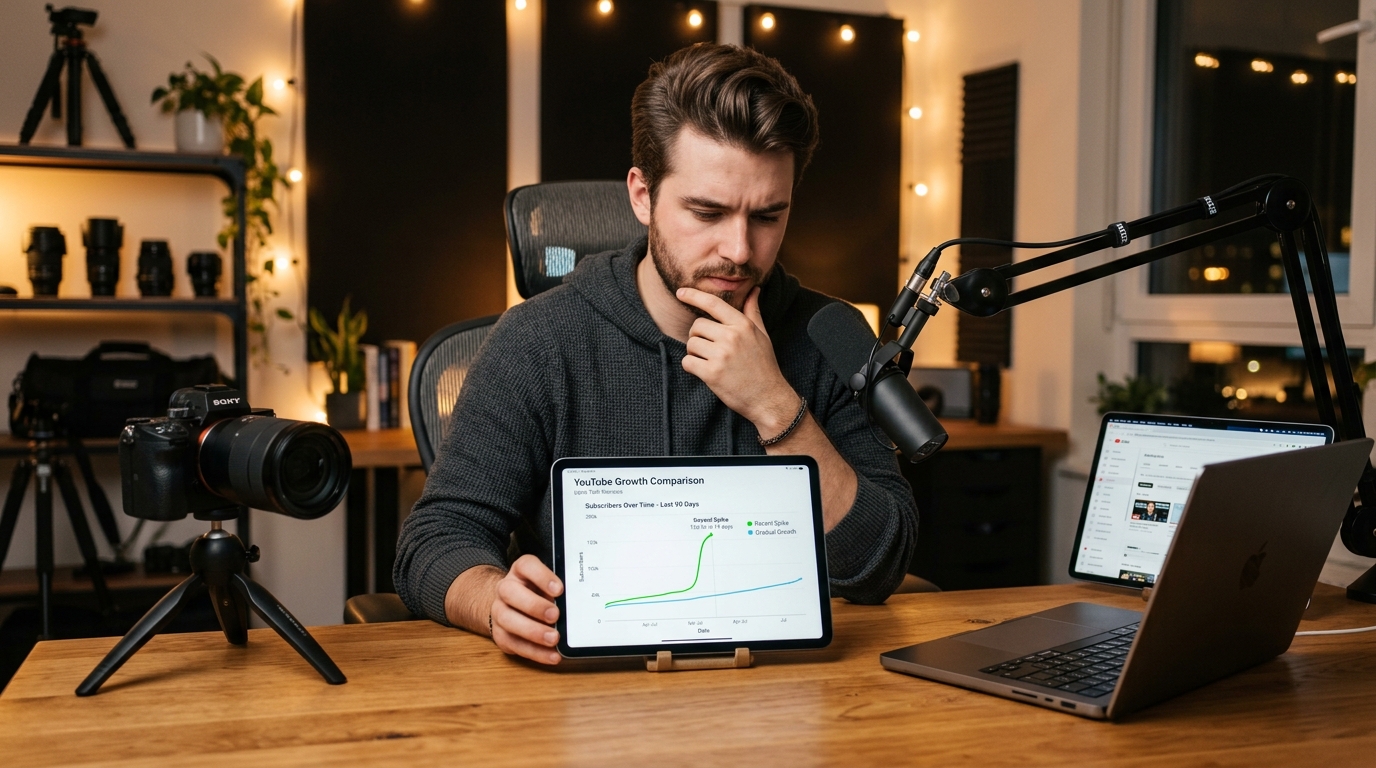
Getting your first 1,000 YouTube subscribers is usually less about finding one magical viral trick and much more about figuring out what makes the right viewers want to return to your channel repeatedly.
Start by looking at your channel directly from a new viewer's point of view. Can someone tell within five seconds what your channel is about, who it is built for, and what tangible benefit they will receive from subscribing? If your recent uploads cover completely unrelated topics, you must fix that disconnect before worrying about your subscriber count. A viewer is far more likely to subscribe when they know exactly what kind of useful content they can expect from you next.
Then build around problems your target viewers are already actively trying to solve. Never choose video topics purely because they boast massive search volume in generic research tools. Look for questions where you can deliver a superior answer, explain a confusing concept more clearly, demonstrate a repeatable process, compare real-world options, or solve a problem existing videos are failing to handle well.
For each video you publish, provide the viewer with one clear reason to click and one clear reason to stay. Your title and thumbnail packaging must make the promise unmistakable, while the opening seconds of the video must quickly deliver on that exact promise. If viewers click but abandon your video within forty seconds, getting more algorithmic impressions will not fix your channel growth. For deeper tactics on retaining viewer interest throughout your uploads, consult our guide on how to increase YouTube watch time.
Crucially, your first 1,000 subscribers must come from viewers who are genuinely likely to watch your subsequent uploads. A video that unexpectedly garners 100,000 views but attracts an audience unrelated to your core topic is far less useful than a 10,000-view video that brings in dedicated viewers who watch multiple videos in your catalog and subscribe with high intent.
📋 The 7-Point Creator Upload Checklist
Run every single video through this checklist before hitting publish to ensure maximum subscriber conversion:
- • Audience: Who exactly is this video for, described in one clear sentence?
- • Problem: What specific question, frustration, or obstacle does this video solve?
- • Topic: Is this problem something that audience actively searches for or cares about?
- • Packaging: Does the title and thumbnail communicate the core outcome immediately?
- • Opening: Does the opening 30 seconds confirm the premise and deliver value without fluff?
- • Next Step: After finishing, is there a logical reason for the viewer to watch another video on your channel?
- • Measurement: Did the video attract the right viewers who subscribe and stay, rather than empty vanity views?
Once you discover videos that consistently bring the right viewers and subscribers, never treat them as isolated coincidences. Study what made them work in YouTube Studio, and systematically build your subsequent videos around that identical audience and related problems.
Can You Actually Get 1,000 YouTube Subscribers in One Day? (The 24-Hour Reality Check)
The direct answer is: Yes, it is physically possible, but exceptionally unusual for a brand-new channel starting with zero baseline audience.
When a channel gains 1,000 subscribers within a single 24-hour window, it almost never happens through gradual algorithmic browsing. Instead, that velocity is fueled by one of three distinct catalysts:
1. Breakout Shorts Distribution
A Short gets picked up by the Shorts Feed algorithm, accumulating 200,000 to 500,000 views in hours. Because subscribing on Shorts requires only a single tap, conversion can spike rapidly.
2. Severe Trend Timing
Publishing the definitive breakdown or solution to breaking industry news or software releases within hours of the event, capturing tens of thousands of search impressions before competitors react.
3. External Audience Migration
Directing an established following from an existing platform (TikTok, Instagram, an email newsletter, or a major creator collaboration) directly to YouTube on launch day.
Why Buying Subscribers or Using Sub4Sub Destroys Channels
Because creators desperately want to unlock YouTube monetization requirements, many fall into the trap of purchasing subscribers or participating in Sub4Sub forums.
Doing so will permanently poison your channel's algorithmic health for three decisive reasons:
- ✕ They Generate Zero Future Watch Time: Purchased bot accounts and Sub4Sub participants will never click or watch your future videos. Having 1,000 subscribers who watch zero seconds produces zero ad revenue and zero watch hours. For full context on revenue unit economics, see our guide on how much YouTube pays for 1 million views.
- ✕ They Cripple Your Initial Click-Through Rate (CTR): When you upload a new video, YouTube shows impressions to your existing subscribers first. If those subscribers ignore your notification because they are fake bots or uninterested Sub4Sub accounts, your initial CTR plummets to near zero. The algorithm interprets this as audience rejection and immediately terminates wider distribution.
- ✕ Routine YouTube Bot Purges: YouTube regularly executes automated audit sweeps that purge fraudulent accounts. Creators who buy 1,000 subscribers routinely wake up to find their count slashed back to double digits, along with the risk of termination for Terms of Service violations.
24-Hour Viral Spike vs. Repeatable Growth Engine
| Growth Factor | 1-Day Viral Spike (Shorts / Trend) | Repeatable Content System (Targeted) |
|---|---|---|
| Audience Alignment | Broad, casual, often passive | Highly specific, high commercial intent |
| Repeat Viewer Return Rate | Low (5% to 12% watch next upload) | High (35% to 60% watch next upload) |
| Watch Hours Contribution | Minimal (Shorts feed views do not count) | Directly builds toward 4,000 watch hours |
| Monetization Potential | Low RPM ($0.05 to $0.15 Shorts pool) | High RPM ($4.00 to $15.00+ Watch Page ads) |
| Long-Term Predictability | Volatile; relies on algorithmic luck | Predictable compound growth over time |
Step 1 — Fix the Channel Before Chasing Subscribers
Before you invest hours attempting to drive more traffic to your channel, ensure that a new viewer can immediately understand why they should follow you.
A small channel rarely suffers from a subscriber problem in isolation. In reality, it suffers from an audience clarity problem: one video is designed for complete beginners, the next targets advanced technical users, another covers an entirely unrelated personal hobby, and a prospective viewer has zero reason to expect what comes next.
You do not need to restrict your channel to an impossibly narrow microscopic sub-topic, but every upload should make intuitive sense to the exact same archetype of person.
The 5-Second Channel Test
Open your channel's homepage in an incognito browser window as if you have never encountered it before. Can an unfamiliar visitor instantly answer these three fundamental questions?
If you need an entire paragraph of verbal explanation to justify why your channel exists, your channel positioning is not clear enough yet. Your banner, About section, featured video, playlists, and latest uploads must all reinforce one clear, coherent promise.
Audit Your Recent 10 to 15 Uploads
Review your last 10 to 15 uploads and write down the intended viewer archetype for each video.
If you find that one video targets new content creators, another targets competitive gamers, another is an unedited travel vlog, and another is aimed at corporate B2B marketers, you have an audience fragmentation problem that publishing more videos will never fix. A viewer may genuinely enjoy one of those videos and still refuse to subscribe because your next upload looks completely irrelevant to their life.
Subscriber growth is not about convincing someone to like a single video. It is about providing them with total confidence that your future uploads will continue to deliver value to them.
Make the Channel Promise Visible
You do not need a witty slogan. You need a transparent expectation. Compare these two positioning statements:
"Tips, tutorials, and insights about YouTube."
Too broad. Does not specify who it is for, what skill level is expected, or what result is achieved.
"Practical YouTube growth strategies for creators trying to reach their first 10,000 subscribers."
Unambiguous. The target creator knows within two seconds that this content is directly engineered for their exact situation.
Apply this exact clarity when organizing your channel homepage. Position your highest-converting, most representative videos where a first-time visitor can locate them instantly. Group related videos into problem-focused playlists so that finishing one useful video naturally leads the viewer to the next video in the series.
Step 2 — Find Topics That Can Actually Bring New Viewers
Once you know exactly who you want to attract, replace the generic question "What should I upload next?" with a much more powerful question:
Reaching your first 1,000 subscribers becomes substantially faster when your videos are attached to problems people already care about. You do not need to guess what might mysteriously go viral. You need a repeatable research method to identify topics where existing viewer demand and your ability to provide a superior answer overlap. You can also analyze trending niche tags using our free YouTube Tag Extractor.
Build a List of Real Viewer Problems
Start by compiling a list of 10 to 20 precise questions your target viewer is actively searching for, watching, or debating online.
Never begin with broad, generic categories such as:
- • YouTube tips
- • Fitness workouts
- • Camera photography
- • Digital marketing
Transform those broad topics into granular viewer problems:
- • "How do I get my first 100 YouTube subscribers from zero?"
- • "Why are my YouTube videos getting impressions but zero clicks?"
- • "What camera and lighting settings should I use for an indoor desk setup?"
- • "How do I lose weight while working a sedentary 9-to-5 desk job?"
- • "Why are my Facebook ads getting clicks but zero checkout sales?"
The more sharply your topic reflects an authentic, specific pain point, the easier it becomes to script and package a high-converting video around it.
Search the Topic on YouTube & Identify Demand-Supply Mismatches
Search each problem idea on YouTube and analyze the top results critically. Do not merely seek out videos with massive view counts. Look for glaring mismatches between what viewers want and what current search results provide:
Verify That the Topic Travels Beyond a Single Creator
A crucial indicator of genuine topic demand is whether multiple channels of varying sizes are generating meaningful view volume from the same subject.
If one massive creator with two million subscribers has 500,000 views on a topic, that does not automatically prove you should produce your own version. Their established brand, subscriber baseline, and external distribution may be doing all the heavy lifting.
However, if three smaller channels with under 5,000 subscribers each achieve 20,000 to 50,000 views on related angles of the same problem, that is conclusive evidence that the topic itself carries strong organic demand. You can verify competitor categorization and metadata with our YouTube Category Checker.
The 4-Factor Topic Evaluation Scorecard
Before committing production hours to an idea, grade it across four vital dimensions:
- • 1. Demand: Are people already actively searching for, watching, or asking questions about this problem?
- • 2. Audience Fit: Does this topic attract the exact person who will want to watch your next five uploads?
- • 3. Opportunity: Do current search results leave obvious room for a clearer, updated, or more comprehensive breakdown?
- • 4. Advantage: Do you possess unique insights, demonstrations, data, or personal experience to add?
If a topic scores high across all four factors, add it immediately to your content pipeline. If it exhibits high search demand but attracts the wrong audience, discard it. And if it fits your personal interest but nobody appears to care about the problem, never force it into production.
Step 3 — Build the Video Around One Clear Promise
Now that you have validated a topic with proven audience demand, structure your video so that it provides a specific, undeniable reason for viewers to choose your content over competing results.
Identify the exact tangible outcome behind the viewer's search query. If a viewer searches for "how to get your first 100 YouTube subscribers," they do not want academic theory about video algorithms. They want an actionable sequence of steps they can execute today to earn their first 100 followers.
The 5-Step Video Planning Blueprint
Complete these five steps before writing a single sentence of your script:
Step 4 — Make the First 30 Seconds Earn the Next 30
Once a viewer clicks your video, your strategic objective shifts completely.
They are no longer deciding whether the topic interests them; they have already decided that by clicking. They are now actively deciding whether your specific video is worth their precious time or if they should hit the back button.
Do not make them wait through animated channel logos, lengthy autobiographical introductions, or generic explanations about why YouTube is competitive.
The 3-Part Opening Framework
Within your first thirty seconds, deliver three essential psychological anchors:
Confirm
Reassure the viewer immediately: "Yes, this video is about the exact problem you clicked to solve."
Direction
Provide the roadmap: "Here is what we are going to break down, fix, or show you step-by-step."
Immediate Value
Deliver an actionable insight or framework before the 30-second mark elapses.
Script Teardown: Fluff Intro vs. High-Retention Hook
"Hey guys, welcome back to my channel! If you're new here, my name is Alex and I've been doing YouTube for three years. Today we're going to talk about video topics because coming up with ideas is really hard. But before we get into it, make sure to hit that subscribe button, like the video, and turn on the notification bell so you never miss an upload..."
"Take the last five successful videos in your niche and write down the specific problems behind them. Then search those exact problems on YouTube and find where the current results are outdated or shallow. That gap is where your next breakout video ideas come from. In this video, we'll walk through the four steps to validate those ideas before you ever hit record."
Notice the profound difference: within twenty seconds, the high-retention hook has taught the viewer a concrete method and promised an organized breakdown. The viewer has already received value, earning their attention for the next minute.
Step 5 — Give Viewers a Real Reason to Subscribe
Viewers never subscribe because a creator remembered to ask at a specific timecode. They subscribe when they can see clear, undeniable future value in following your channel.
Instead of reflexively inserting generic "Don't forget to subscribe" interruptions into your video, give your viewers a tangible reason to expect continuous solutions from your channel.
The 4-Step Subscription Conversion Method
Follow this strategic sequence whenever crafting your call to action:
- Identify What the Viewer Came For: Reiterate the exact problem this video has just successfully resolved for them.
- Identify the Next Logical Hurdle: What will this same viewer naturally need help with next, now that this first problem is solved?
- Make That Future Content Visible: Tell them about related upcoming guides you are preparing, or direct them to an existing follow-up tutorial already published on your channel.
- Place the Call to Action Immediately After Value Delivery: Position your request right after delivering your most insightful breakthrough, connecting the subscription directly to future outcomes.
"Now that your video packaging is set up to capture clicks, your next bottleneck is keeping those viewers watching past the two-minute mark. If you want our step-by-step framework for diagnosing audience retention drop-offs, subscribe to the channel—we're breaking down the full retention blueprint in our next upload."
This framing shifts the subscription from a selfish favor for the creator into an advantageous decision for the viewer.
Step 6 — Turn One Successful Video Into Your Next 5 Videos
When an upload brings in noticeably more subscribers than your typical baseline, never move on from that topic too quickly. That video has provided hard algorithmic proof that a specific problem, angle, or viewer archetype resonates with your channel.
Open YouTube Studio and examine that video's specific analytics:
- • Subscribers Gained: Which segments of the video triggered the most new subscriptions?
- • Traffic Sources: Did the views originate from YouTube Search, Browse Features, or Suggested Videos?
- • Audience Retention Curve: Where did retention hold firm, and where did drop-offs happen?
- • Comment Questions: What specific follow-up questions are viewers asking in the comment section?
Mining Viewer Comments for Follow-Up Topics
The questions in your comment section represent validated demand for your next five uploads.
For example, if a tutorial on YouTube keyword research performs well and viewers begin asking:
- • "How do I find keywords with low competition?"
- • "Which keywords should a brand-new channel target first?"
- • "How do I know if a search keyword has enough view volume to justify a video?"
You have instantly unlocked three high-intent follow-up video ideas with built-in viewer interest.
Do not make five identical variations of the original video. Follow the viewer's problem progression one step deeper every time:
If multiple uploads orbiting the same core problem continue bringing engaged subscribers, you have identified a content pillar worth dominating. That is vastly stronger evidence than copying a topic simply because an unrelated large creator uploaded it.
Step 7 — How to Use YouTube Shorts to Get More Subscribers
YouTube Shorts can expose your channel to new audiences at incredible speed, but a Short accumulating views does not automatically build the engaged audience your channel requires.
Always engineer Shorts around the exact subjects you want your primary channel to be known for.
If your long-form channel focuses on YouTube growth strategies and SEO, for instance, never publish a random viral meme or comedy clip just because it has a chance of racking up views. Create Shorts directly addressing the specific pain points your core audience worries about:
- • "Why your YouTube videos aren't getting impressions"
- • "One common thumbnail mistake hurting your YouTube CTR"
- • "How to identify a low-competition YouTube keyword nobody is targeting"
The Shorts-to-Channel Progression Engine
When a Short performs well, do not produce an unrelated clip next. Analyze what caused that specific topic to connect:
Step A: Short captures viewer attention on a specific problem.
Step B: Analyze what aspect of the solution generated comments and subscriptions.
Step C: Produce an in-depth long-form masterclass or comprehensive tutorial covering that exact problem in detail.
Step D: Link the long-form video in the Short's related video setting, giving Shorts viewers a direct path into your long-form catalog.
Never evaluate Shorts purely by raw view volume. A 100,000-view Short that yields a handful of disconnected subscribers who never watch another video is far less valuable for your 1,000-subscriber milestone than a 10,000-view Short that brings in dedicated, high-intent viewers who watch your long-form videos and comment regularly. For complete strategies on turning short-form traffic into long-form watch time, read our guide on how to use YouTube Shorts to grow a long-form channel.
Setting Realistic Milestones: The Math from 0 to 1,000 Subscribers
Understanding the realistic statistical conversion rates on YouTube protects creators from premature burnout and misdiagnosed performance.
On YouTube, standard subscriber conversion rates range between 0.5% and 2.5% of total views for well-targeted content. That means for every 1,000 views your videos generate, you can realistically expect to gain between 5 and 25 subscribers:
| Subscriber Milestone | Views Needed (at 1% Conversion) | Views Needed (at 2% Conversion) | Key Focus Area |
|---|---|---|---|
| First 100 Subscribers | 10,000 views | 5,000 views | Proving audience clarity & 5-second test |
| 250 Subscribers | 25,000 views | 12,500 views | Improving 30-second intro hooks |
| 500 Subscribers (Fan Funding) | 50,000 views | 25,000 views | Unlocks Super Thanks & Memberships tier |
| 1,000 Subscribers (Full YPP) | 100,000 views | 50,000 views | Qualifies for Watch Page ad revenue share |
Reaching 100 subscribers is often psychologically the hardest milestone because YouTube has zero historical viewer performance data on your channel. As you validate winning topics and produce playlist clusters, your compounding momentum speeds up substantially. Also remember to publish when your specific audience is online; see our analysis on the best time to post on YouTube to maximize initial launch velocity.
Once you cross 1,000 subscribers, check your monetization readiness with our free YouTube Monetization Checker and model your potential earnings using our YouTube Revenue Calculator.
Frequently Asked Questions About Gaining YouTube Subscribers
How to Get 1,000 YouTube Subscribers in 1 Day?
Gaining 1,000 subscribers in 24 hours is possible, but highly unusual for a brand-new channel. The fastest legitimate path is publishing a high-velocity video or Short that reaches a massive, highly targeted audience, riding an acute viral trend or breaking news event, executing a collaboration with an established creator, or migrating an existing following from another platform like TikTok, Instagram, or an email list. Never buy subscribers or rely on Sub4Sub; those tactics destroy your organic click-through rate and leave you with zero watch time.
Is It Easy to Get 1,000 Subscribers on YouTube?
Usually, no. The difficulty depends heavily on your niche, topic selection, packaging quality, and your ability to reach the right viewers consistently. A channel can reach 1,000 subscribers rapidly if one or two well-positioned videos connect with underserved demand, while another channel may require dozens of uploads if its positioning is unfocused. Instead of tracking the raw count of uploads, identify which specific topics generate subscribers and build more content directly around those subjects.
Is 2,000 Views in 1 Day Good on YouTube?
For a new or small channel, 2,000 views in one day is a very strong result, particularly if your previous uploads averaged fewer views. However, raw view volume alone does not determine success. Audit your analytics to verify where those views originated, how long viewers watched, how many subscribers were gained, and whether viewers continued into other videos. 2,000 views from your exact target audience are vastly more valuable than 20,000 empty views from an unrelated topic.
Does YouTube Pay $1 Per 1,000 Views?
No. YouTube does not have a flat, fixed $1 payment per 1,000 views. Actual earnings depend entirely on your channel's RPM, audience geography, niche, advertiser competition, and video format. While some gaming or meme channels earn under $1.50 RPM, business, finance, and software channels frequently earn $8.00 to $20.00+ per 1,000 views. Furthermore, channels that have not yet joined the YouTube Partner Program earn zero ad revenue regardless of view count. Learn how early-stage channels earn their first payout in our guide on how to make your first $100 on YouTube.
What Happens If You Reach 1,000 Subscribers but Not 4,000 Watch Hours?
To unlock full YouTube Partner Program ad monetization, you must fulfill both requirements: 1,000 subscribers AND either 4,000 valid public watch hours on long-form content within the past 12 months, or 10 million valid public Shorts views within the past 90 days. If you hit 1,000 subscribers before reaching 4,000 watch hours, you can qualify for the earlier fan funding tier (memberships, Super Chat, Super Thanks) if you have reached at least 3,000 watch hours, but Watch Page ad revenue remains locked until the 4,000-hour threshold is crossed.
Final Takeaway: Building an Audience That Lasts
Reaching your first 1,000 YouTube subscribers is a major milestone, but treat it as the natural byproduct of a solid content system rather than the finish line.
By designing your channel for a specific viewer, packaging videos around authentic problems, hooking attention with zero fluff, and giving viewers an undeniable reason to anticipate your next upload, you build a foundation that compounds far past 1,000 subscribers.
Stay focused on serving the viewer, audit your metrics regularly, and let repeatable value drive your channel growth.